What Airbnb’s New Service Fee Percentage Means for Owner Pricing

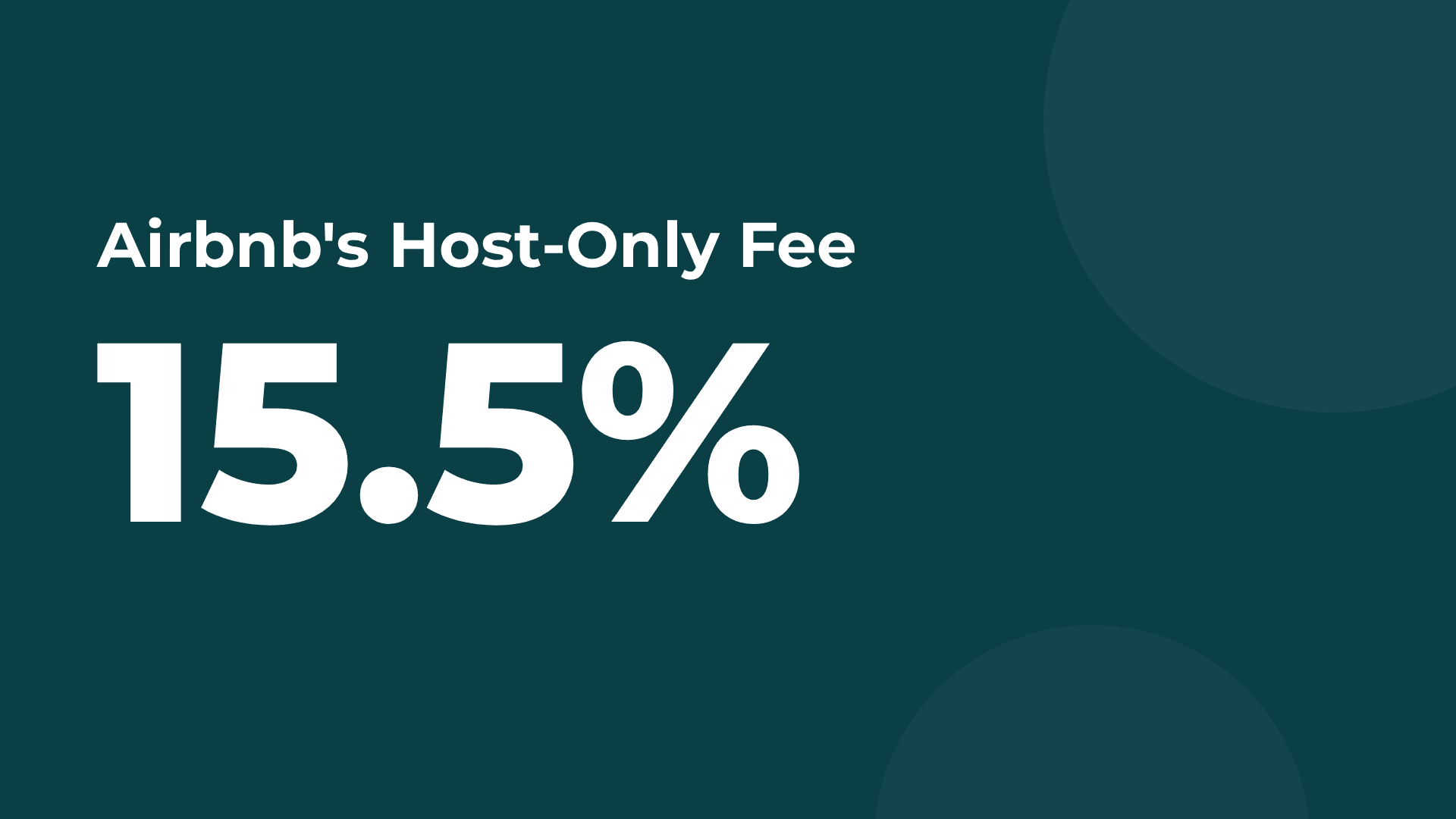
Airbnb is finishing the rollout of a change it’s been making for over a year: replacing its split-fee model with a single host-only fee.
This shifts the cost of using the platform entirely onto owners, rather than splitting it between owners and guests. That makes pricing a more active responsibility for hosts — and getting it right matters more to your bottom line than it used to.
Here’s what to know about Airbnb’s host service fee percentage in 2026, how it impacts your rates, and what steps you can take to protect your payout.
If you’d like to gain the expertise of a strategic partner without losing the strong performance you’ve already built on Airbnb, we can help. Evolve owners can transfer an existing Airbnb listing so work comes off your plate, not momentum.
In This Article:
What Changed: Airbnb’s New Host-Only Fee Structure
What the New Fee Structure Means for Pricing
DIY Owners: More Exposure, More Room for Costly Mistakes
Evolve-Managed Listings: Already Adjusted, Payout Protected
Why Evolve Puts You in the Best Position to Earn
What Changed: Airbnb’s New Host-Only Fee Structure
Under Airbnb’s old system, hosts paid a small service fee (around 3%) and guests paid a separate fee on top of the listing price (roughly 14–16%). Under Airbnb’s new fee structure, guests see one all-in price at check-out, and hosts pay a single fee — 15.5% for most listings — deducted from their payout.
That 15.5% Airbnb host service fee percentage for 2026 is the number most hosts should have circled. Airbnb has been migrating professionally-managed listings to this model since late 2025, and it’s now finishing the transition for independent hosts. The final deadline was September 15, 2026 in most countries, and October 13, 2026 in the EU and Switzerland. Reservations booked before a host’s switch date keep the old fee terms; everything after follows the new one.
What the New Fee Structure Means for Pricing
The simplified check-out is good news for guests — one clear price, no fee surprises at the end.
For hosts, though, this change puts the full weight of the fee on the price you set. If a host’s advertised price stays the same as it was before, the payout doesn’t. Airbnb’s own example makes the mechanics clear: a $100 price under the old model still earned the host $97 after fees. That same $100 price under the new host-only fee earns just $84.50 — a real cut.
To keep the same payout, the price has to go up by more than 15.5%. And because the fee is calculated on what guests pay at check-out rather than the price an owner sets upfront, the math works out to roughly an 18% markup, not a flat 15.5% one. That distinction trips up a lot of hosts doing this manually — and it applies to cleaning fees and other add-ons, not just the nightly rate.
DIY Owners: More Exposure, More Room for Costly Mistakes
For owners managing their own Airbnb listing, this fee change isn’t a one-time fix — it’s an ongoing pricing exercise. A few things make it harder than it looks:
- The math is easy to get wrong
Multiplying by a flat 15.5% to understand your markup actually understates your needed price increase, and the difference compounds across every booking and every listing in a portfolio.
- It’s not a “set it and forget it” adjustment
Nightly rates, cleaning fees, pet fees, and other add-ons all need the same recalculation — and they need to be revisited as market rates shift.
- Channel-by-channel pricing gets complicated
If you’re listed on more than one channel, raising a price everywhere to offset an Airbnb-only fee makes a listing look overpriced on Vrbo, Booking.com, or a direct-booking site that doesn’t charge the same fee.
- Compensation in either direction carries a cost
Owners who raise rates too aggressively risk losing bookings to better-priced competitors. Owners who don’t adjust enough are giving up a larger share of every payout to Airbnb.
None of this makes an Airbnb listing a bad idea. It just means DIY owners are now doing new pricing math on a deadline — the kind of work that’s easy to get a little bit wrong in a way that adds up over a year of bookings.
Evolve-Managed Listings: Already Adjusted, Payout Protected
Owners who work with Evolve have already been through this change. Evolve moved its Airbnb listings to the 15.5% host-only fee back in 2025 — and the adjustment happened automatically, with no changes required from the owner.
That’s because of how Evolve prices every listing for distribution in the first place. Your base rate — the one Evolve’s revenue managers set and continually adjust on evolve.com — isn’t the same as what a guest sees on Airbnb, Vrbo, or Booking.com. Each channel has always charged its own commission, ranging from roughly 3% to 18%. So Evolve marks up the advertised rate on each site by just enough to net you your full base rate after that channel’s fee comes out.
When Airbnb’s fee changed, Evolve’s markup changed with it. Owner payout math didn’t.
That base rate, however, isn’t just the simple difference between what an owner might set as a target and what the markup requires. It’s continually optimized using proprietary SmartRates technology and revenue manager expertise to dynamically shift with market trends.
This is the practical difference between DIY and working with a company like Evolve: a DIY owner absorbs each platform’s fee changes directly, has to recalculate pricing across channels, and risks either underpricing (giving away income per booking) or overpricing (losing bookings) in the process.
An Evolve-managed listing is strategically priced to be most competitive — while also grabbing the most earning potential every day.
Already listed on Airbnb but looking for professional support? When you join Evolve, we’ll transfer your Airbnb listing. The reputation you’ve built stays intact — you just offload the work of effective pricing (and gain access to all the major booking channels).
Put Yourself in the Best Position to Earn with Evolve
Airbnb’s fee change is a good example of a broader pattern: booking sites, tax rules, and market conditions shift constantly, and every shift is a small pricing decision an owner either has to make correctly or hand off to someone who will.
Evolve’s model is built around taking that work off your plate without asking you to pay for it twice. Your rates stay competitive across every channel because Evolve’s revenue team is continually adjusting them. Third-party fees, including Airbnb’s, get absorbed into a markup rather than passed through as a surprise deduction. And because Evolve’s SmartRates dynamic pricing and multi-channel distribution are working in the background, the goal isn’t just to protect your income from fee changes — it’s to grow it.
Whether you’re new to vacation rental ownership or re-evaluating your current setup after seeing what this Airbnb change actually costs, Evolve’s Vacation Rental Advisors can walk you through a free income projection for your property and show you what your payout looks like with the fee already built in.
See if you qualify to book a free consultation today.